Brand Guidelines That Hold Up in Everyday Use
A corporate design manual – also known as a style guide or CD manual – documents the visual guidelines for your brand, from the logo and colors to typography and applications. We develop these for medium-sized companies and startups in Munich, ranging from concise basic guidelines to comprehensive digital style guides.
As a corporate design agency, we develop customized guidelines that provide clear direction for employees and external service providers. This ensures that your brand identity is consistently implemented across all communication channels without limiting the necessary creative freedom.
Depending on your needs, we create concise basic guidelines, comprehensive corporate design manuals, or digital style guides. The content and scope are tailored to your corporate design, the media used, and the requirements of the end users.
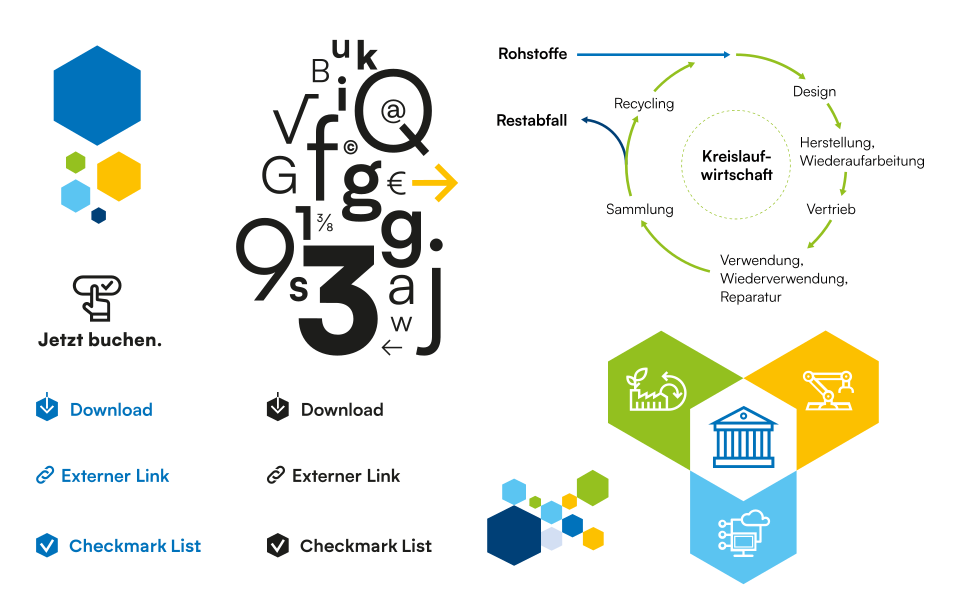
The Style Guide as the Foundation of Your Brand Communication
Today, it’s more important than ever for your brand to convey a clear and consistent image. A style guide for your corporate design is not just a set of rules for using your logo, colors, and fonts. Branding guidelines ensure that your brand identity is presented consistently across all communication channels. From web design to the layout of brochures and flyers – a style guide ensures a consistent look and feel for your company.
Additional Corporate Design Services:
Corporate Design Logo Design Logo Redesign Business Stationery Brochure Design Flyer Design

Interested in a style guide for implementing your design?
Take the first step toward a professional brand image! We’ll advise you with no obligation and without using technical jargon.
What is a Corporate Design Style Guide?

A corporate design manual, also known as a CD style guide, is the user guide for your corporate design. It defines and documents how the logo, colors, typography, imagery, and other branding elements should be applied consistently.
These guidelines are essential for presenting your brand strategy consistently across all platforms and touchpoints. A well-thought-out style guide is more than just a collection of rules. It is a strategic tool that helps internal users and service providers achieve a clear and consistent brand perception.

The Benefits of a Style Guide
A style guide offers numerous benefits for your company. Implementing clear guidelines ensures consistency in your communication across all media. This leads to stronger brand recognition.
- A style guide simplifies the design process when creating new marketing materials. It saves time and resources and minimizes errors.
- A style guide makes it easier to train new employees and collaborate with external agencies. It defines clear instructions and expectations for the use of all elements of brand communication.
- A style guide supports your marketing and customer loyalty, as its use leads to a consistent brand image. This helps you achieve greater brand recognition for your company.
Your Style Guide: Tailored to Your Needs
Effective branding brings your brand strategy to life. A style guide helps you, your employees, and your service providers apply it and makes implementation easier.
A modern style guide goes beyond rigid design guidelines. A good style guide is a tool tailored to the specific needs of your company. It supports your employees in their work by simplifying the application of brand guidelines. It promotes users’ creative freedom without compromising brand consistency.
A good brand style guide serves not only as a guide but also as a source of inspiration for communicating a cohesive and appealing brand identity.


Creating a Style Guide
Typically, an external agency is commissioned to develop a corporate design. Based on the company’s identity, the visual identity is developed through a strategic corporate design process.
Once the corporate design is complete and initial experience with its application has been gained, the corporate design elements are documented in the style guide. In addition, the most important rules for applying the individual elements are defined. To illustrate and facilitate understanding, examples of how the elements are used are included in the style guide.
All files required for implementation – such as logo files, color palettes, fonts, images, graphic elements, and CSS files – are made available to users. For ease of use, the style guide references these files.
Ideally, the finished style guide is published digitally, as a website or PDF. Printed editions are no longer considered up-to-date today.
Your contact for style guides

Christoph Ehlers
Graduate in Communication Design (University of Applied Sciences)
Ready for a free initial consultation?
We’d be happy to schedule one on short notice – via video conference, over the phone, at your location, or at our agency.
The Key Elements of a Style Guide
1. Elements of Corporate Design
An effective style guide defines and documents all design elements of the corporate identity to ensure a consistent and recognizable brand image.

Logo Usage: This section specifies exactly how the logo is to be used, including aspect ratios, spacing, and where it may be placed. It also defines variations of the logo for different applications and backgrounds.

Color Palette: The color palette is crucial to a brand’s visual identity. A style guide specifies the primary and secondary colors. It defines the company’s specific colors across all color spaces (e.g., CMYK, RGB, hex codes) to ensure consistent use across various media.

Typography: This section defines the fonts, font sizes, and text styles to be used. Guidelines for font usage and typographic specifications in various contexts help ensure readability and brand consistency.

Visual World: This section defines the types of images, illustrations, and graphics to be used to reinforce the brand message. It focuses on style, tone, and the desired impact of the visual content.

Tone of Voice: The brand’s tone of voice is established to reflect the company’s personality and values in its communications. This includes guidelines on writing style, word choice, and how to address different target audiences.
2. Rules of Application
A style guide contains clear guidelines that ensure the effective and consistent use of all corporate design elements.


Digital Media: Guidelines for applying design elements to websites, social media, mobile apps, PowerPoint, and digital promotional materials.
Print Media: Guidelines for use in traditional media such as brochures, flyers, business cards, posters, and catalogs.
Merchandising and Packaging: Guidelines for the Use of Brand Elements on Physical Products and Packaging.
3. Examples and Templates
A style guide contains examples and templates that illustrate how to apply the guidelines.
Logo Placement: Specific examples that show how to use the logo correctly in various contexts.
Color and Typography Examples: Specific examples of how the color palette and typography are applied in real projects.
Visual World and Tone of Voice: Sample examples of promotional materials that illustrate how the brand’s visual language and tone of voice are implemented in practice.



Corporate Design Manual: Template and Examples
A template for a corporate design manual can serve as a guide for its structure and organization. It shows which topics are typically documented and makes it easier to plan the eventual style guide. However, specific design guidelines cannot be meaningfully taken from a general template: the logo, colors, typography, visual language, and applications must always be tailored to the specific brand and its communication channels.
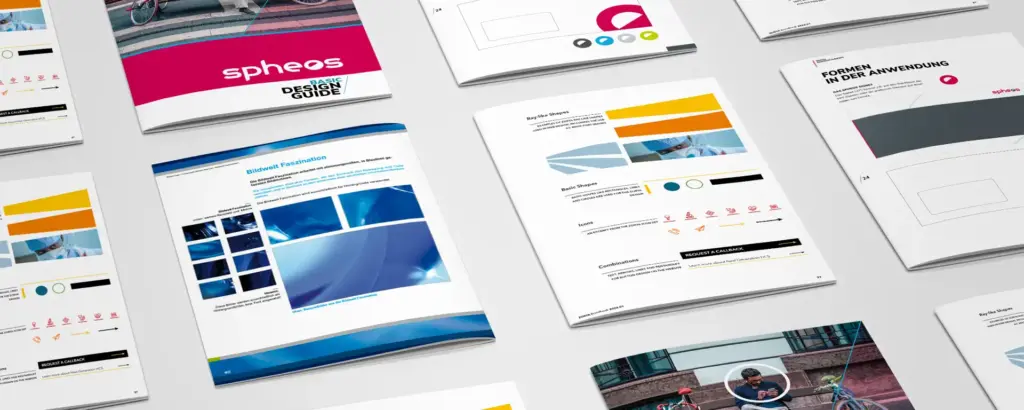
Depending on the company, a corporate design manual can be structured in very different ways. For example, a concise basic style guide documents the most important rules for logos, colors, and typefaces. A comprehensive brand book may also cover imagery, graphic elements, digital applications, presentations, print media, and specific design examples.
Examples of corporate design manuals from our portfolio
Re-Branding
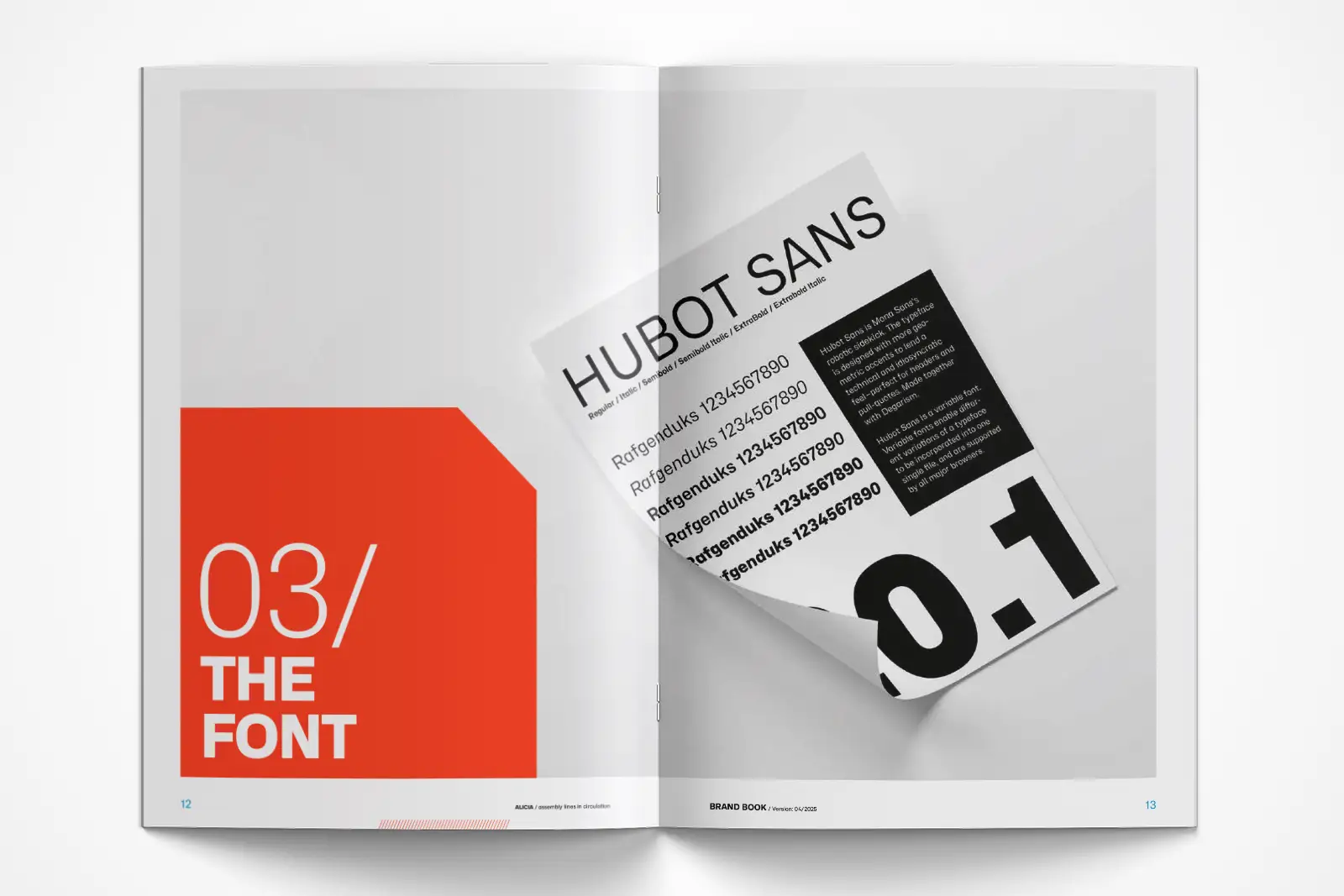
ALICIA Brand Book
Documentation of the visual identity for the project’s professional communications.
Among other things, the ALICIA Brand Book documents the research project’s colors, typography, graphic language, and visual style.
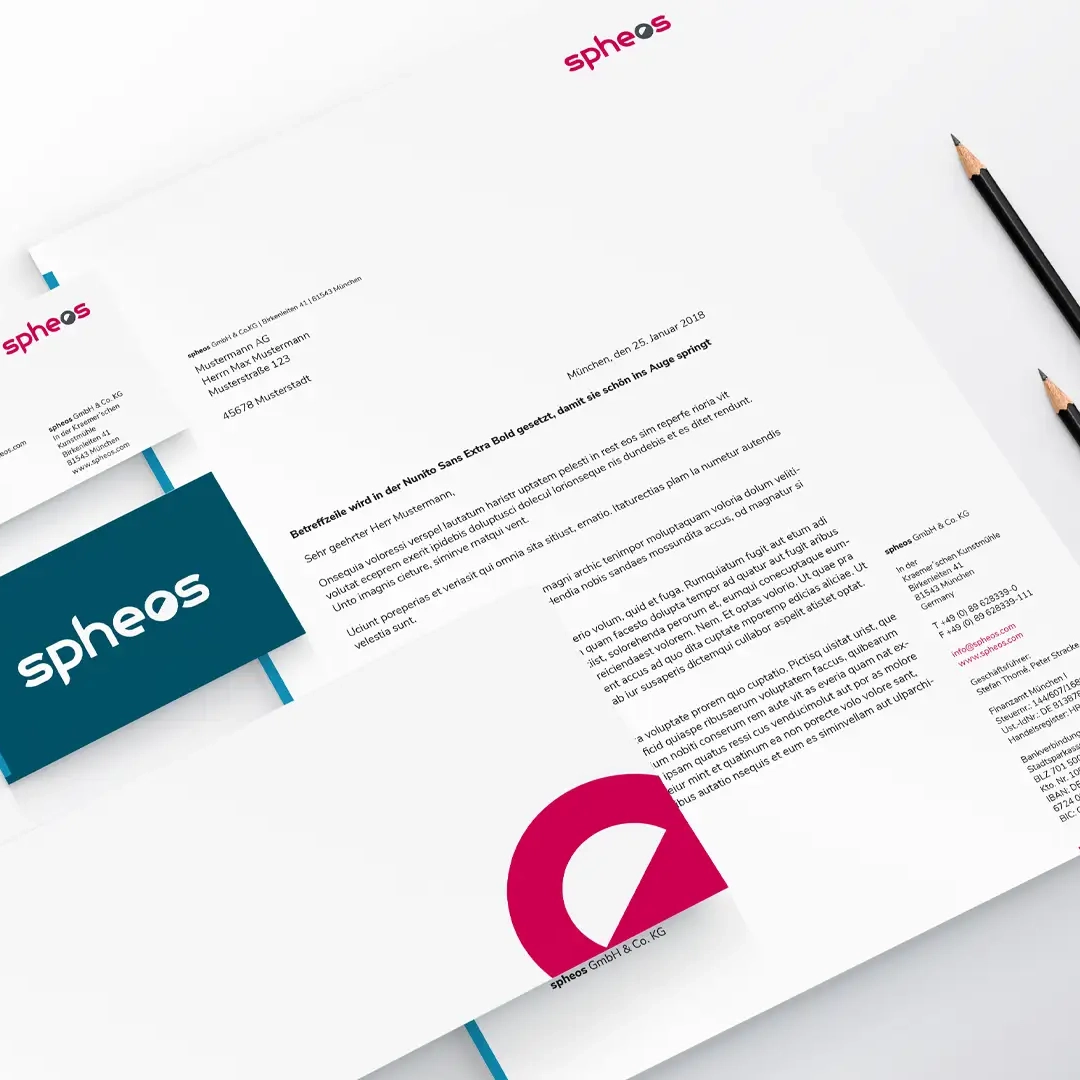
The Basic Style Guide for spheos concisely summarizes the fundamental rules for shapes, colors, fonts, and selected communication tools.
Branding for Life Sciences
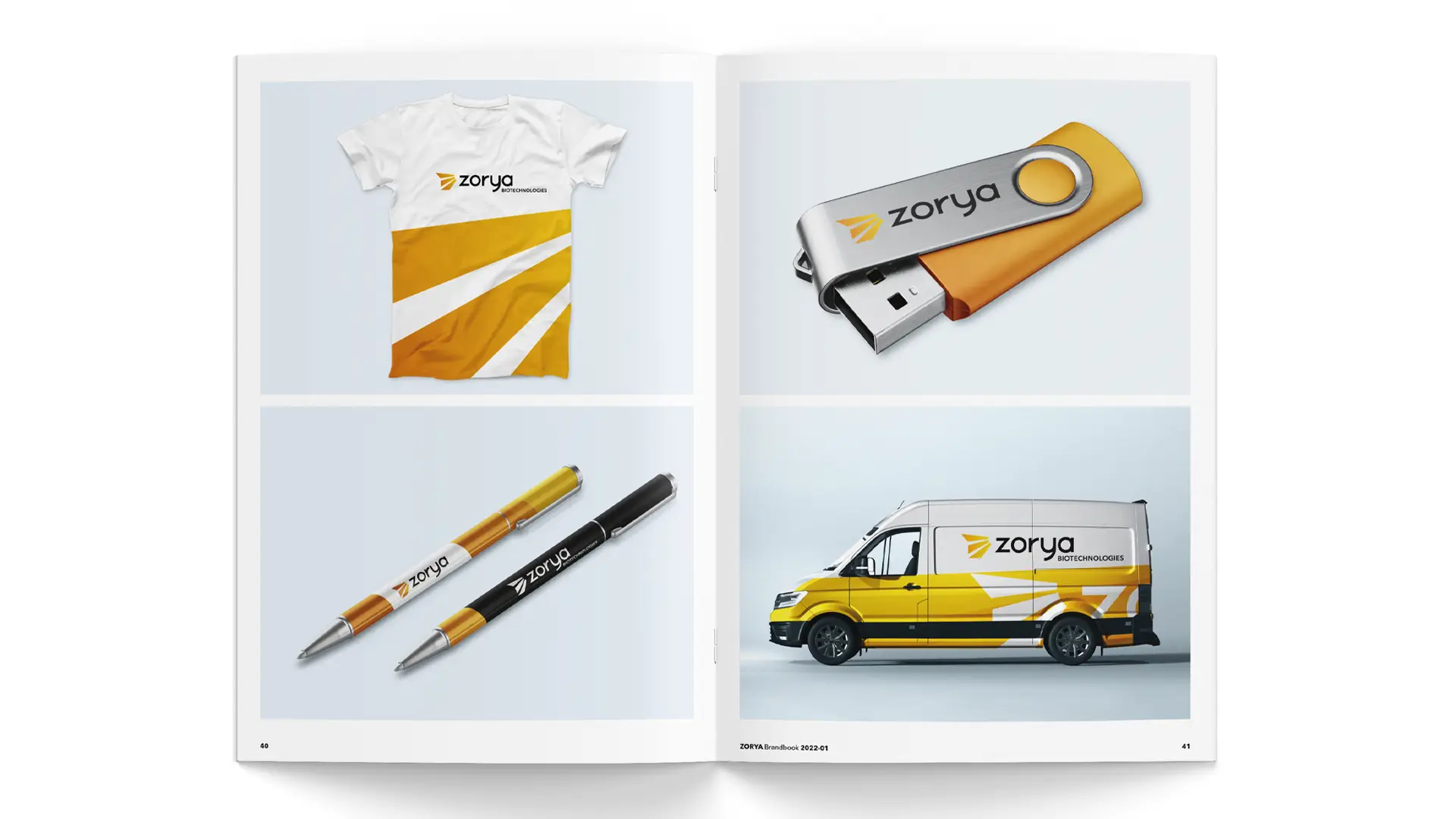
Branding for Zorya
Development of a distinctive visual identity for a company in the life sciences sector.
The Zorya Brand Book contains guidelines for the logo, colors, typography, visual design, graphic elements, and specific brand applications.
The Purpose of Design Guidelines
Consistency in Communication: A style guide ensures that all communication materials are designed consistently—whether online or offline, in advertising, on social media platforms, or in documentation. This strengthens brand identity and makes it easier for customers to recognize the brand.
Conveying a Consistent Message: By establishing guidelines for language, tone, and visual presentation, a style guide helps ensure that a company’s core messages are conveyed consistently.
Efficiency in Content Creation: A style guide serves as a reference for content creators and designers. It saves time and increases efficiency by reducing the need for coordination between different teams.
Preventing Brand Dilution: By establishing clear guidelines for the use of brand elements, a style guide prevents the brand from being diluted due to inconsistent application of its elements.
Cross-departmental integration: A style guide facilitates collaboration between marketing, sales, communications, and other departments. It provides a clear framework for brand presentation.
Adaptation to Various Media Formats: A modern style guide takes into account the requirements of different media formats and platforms, thereby ensuring that the brand is represented appropriately everywhere.
Strengthening Brand Perception: Through consistent application of the corporate design and coherent communication, a style guide strengthens the overall perception and credibility of the brand.
Guidance for Brand Extensions: When introducing new products or services, a style guide provides a foundation for their design. Extensions can be seamlessly integrated into existing brand communications.


Are you ready for a professional Brand Design?
Whether it’s corporate design, a website, or animation: Let’s discuss, with no obligation, how we can effectively showcase your company.